
The short answer
The clarity people feel on day 3 is mostly the fog lifting, not a brain upgrade. By day 3 most bodies run mainly on fat and ketones, and the day-2 dip (often low sodium plus the fuel switch) has passed. A 2025 review of 71 studies found healthy adults think about as well fasted as fed, so it isn't a superpower. It's the absence of fog, plus a quieter, simpler day. Both are real.
The day-3 shift people describe
Ask people who've finished a 3-day fast what day 3 felt like and the words repeat: lighter, calmer, focused, "like someone turned the volume down." That usually follows a day 2 that felt the opposite: headachy, flat, irritable.
That contrast is part of the story. Feeling clear on day 3 is partly feeling normal again after a hard day, and partly something new. Knowing which is which makes day 2 easier to get through.
From the Burnbox community: [ADD: Renata's own day-3 note, or a real customer quote about day 3, used with permission, with the name or initials they approved]
Day 1, day 2, day 3: how fasting usually feels
The route has three stages, and each one feels different:
| Day | How it often feels | What's likely behind it | What helps |
|---|---|---|---|
| Day 1 | Restless, snacky, "what's for lunch?" | Habit and routine more than fuel; glycogen still available | Keep busy at usual mealtimes; drink something warm |
| Day 2 | Headache, flat, foggy, irritable | Glycogen running low, sodium dropping, the fuel switch in progress | Electrolytes spread through the day; easy schedule; early night |
| Day 3 | Lighter, calmer, focused | Running mainly on fat and ketones; no meal decisions; sense of achievement | Hardest thinking in the morning; a walk, not a workout |
Timings vary from person to person. If day 1 is your hardest, read why the first day of fasting feels hardest.
What's happening in your body by day 3?
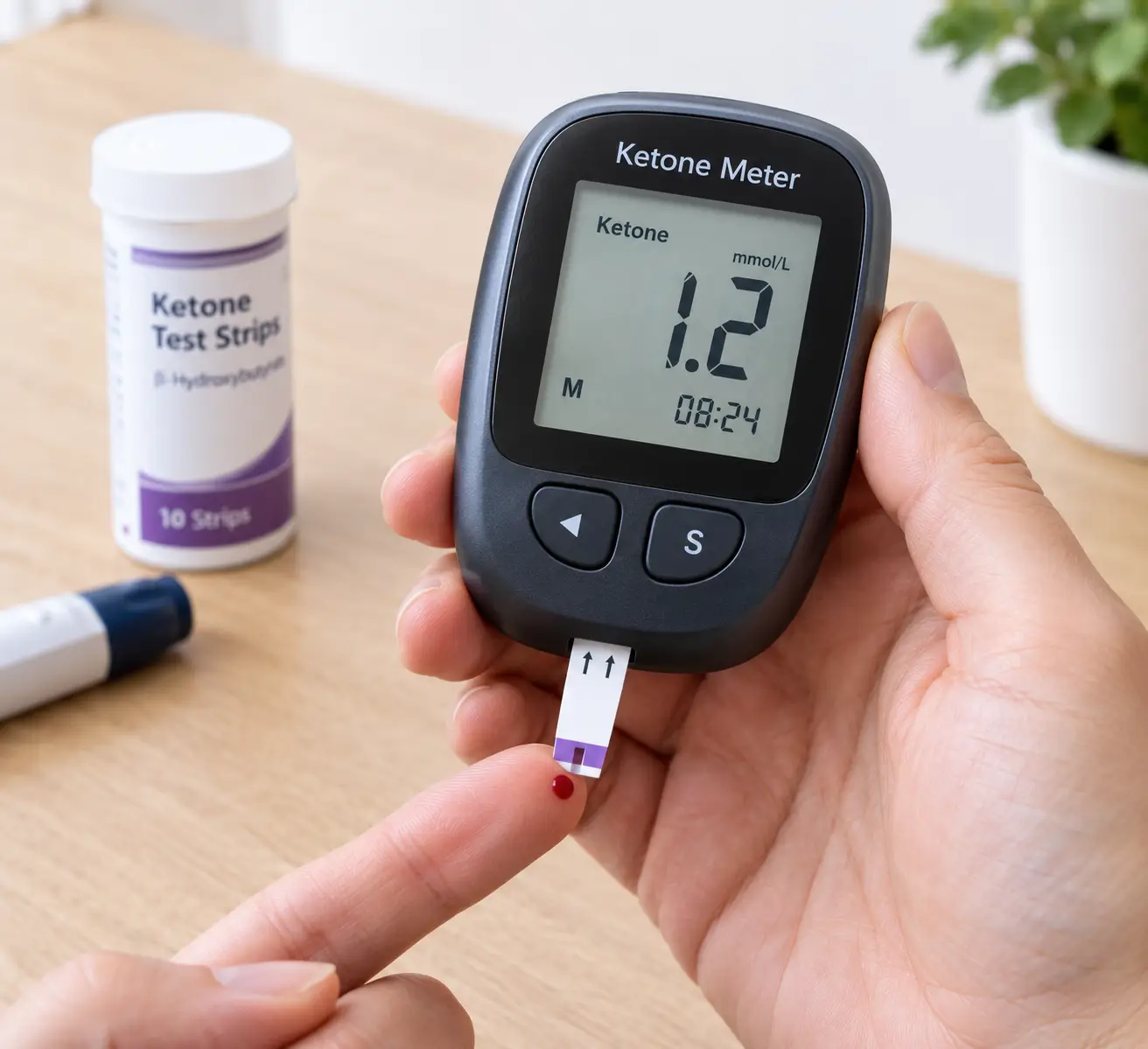
On a normal eating day your brain runs mostly on glucose. During a fast, the liver's stored glucose (glycogen) runs low over the first day or so. The body then switches fuel sources: it breaks down fat, and the liver turns part of it into ketones, which the brain can use as fuel.
What does the research say about fasting and mental clarity?
The biggest study so far is a 2025 meta-analysis led by the University of Auckland. It pooled 71 studies and almost 3,500 people, with tests going back to 1958. Healthy adults scored about the same on attention, memory and planning tests whether they had eaten or not. Three details matter for a 3-day fast:
- Time of day. Fasted people did slightly worse when tested later in the day, as if fasting deepens the natural afternoon dip. That matches what many people feel around 3 to 5 p.m.
- Food cues. Performance slipped on tasks involving food. Hunger doesn't fog your whole brain; it pulls your attention toward food.
- Age. Children and teens did worse when fasting, one reason fasting is an adult practice.
The honest summary: fasting doesn't usually hurt clear thinking in healthy adults, and it may feel better once you're past the switch. Feeling sharper is real as an experience. As a measurable boost, it isn't proven.
How sure can we be?
Established: the fuel switch happens, and the brain uses ketones when glucose is scarce.
Established, from a large review: healthy adults think about as well fasted as fed.
Emerging: ketones may give the brain a steadier energy supply once the switch is done. The 2025 review found the fasted-fed gap shrank in longer fasts and suggested ketones as one possible reason.
Not shown: that fasting makes you smarter than your baseline or "rewires" your brain. There's no good evidence for that in a 3-day fast.
The mind side: why it feels so clear
Some of day-3 clarity has nothing to do with ketones. These are plausible, everyday explanations, not lab findings:
Fewer decisions. No planning meals, no snacking, no "what's for lunch?" Many people are surprised how much mental space food takes up.
No post-meal slump. The heavy, sleepy feeling after a big lunch simply doesn't happen.
A sense of control. You did something hard and you're still standing. That confidence feels like clarity.
Attention turns outward. Once hunger quiets down, which for many people happens after day 2, the food "noise" fades.
That's the mind-body link in practice: a physical change and a psychological one arriving on the same day.
Why some people don't feel it
- Low sodium. Fasting makes your kidneys release more salt. If you've been drinking only water, the fog may be the day-2 headache still hanging on.
- Caffeine withdrawal. Stopping coffee abruptly can cause headaches and fog on its own.
- Poor sleep. Some people sleep lighter while fasting, and a bad night shows the next day.
- A demanding day. Back-to-back meetings or a kid's sick day on day 3 aren't a fair test.
How to give yourself the best chance of a clear day 3
- Keep your electrolytes up, especially sodium, spread through the day.
- Taper caffeine in the days before rather than quitting on day 1.
- Plan your hardest thinking for the morning, since the afternoon dip is when fasting is felt most.
- Keep day 3 lighter if you can: a walk, not a workout.
- Expect day 2 to be the hard one. Knowing it passes is half of getting through it.
If you feel confused, very weak or faint, or your heart is racing, that's not "brain fog." Stop and read what's normal and what isn't.
Where Burnbox fits
The most common reason people quit before the clear day arrives is day 2. Burnbox is built around that: a lime Electrolyte Booster with sodium, potassium and magnesium, grapefruit fiber shakes for hunger, and a warm chicken bone broth each evening. You can piece together the same idea yourself; the kit just means you're not measuring salt at 4pm on day 2. See what's in the kit →
FAQ
Is mental clarity during fasting real?
As an experience, yes, many people report it, especially around day 3. In tests, healthy adults think about as well fasted as fed. The clarity is better described as no fog than as a boost.
Why do I feel foggy on day 2 but clear on day 3?
Day 2 is usually when glycogen runs low, sodium drops and the body is mid-switch. By day 3 the switch is mostly done and many people have adjusted.
Do ketones make you smarter?
There's no good evidence they do. Ketones are a usable brain fuel and may help keep performance steady, but that's not the same as an upgrade.
When should I not trust the "clear" feeling?
If you feel unusually euphoric, dizzy or detached, or have trouble concentrating on simple things, treat it as a warning sign, not a benefit.